Nepal T20 League
The Nepal T20 League represents one of cricket’s most exciting developments in South Asia. This comprehensive guide’ll walk you through everything you need to know about this dynamic tournament that’s reshaping how cricket’s played in Nepal. Whether you’re a die-hard cricket fan or just curious about emerging cricket leagues, you’ll find valuable insights here.
What is the Nepal T20 League?
The Nepal T20 League is a professional Twenty20 cricket tournament that’s become the cornerstone of Nepal’s domestic cricket ecosystem. This league brings together the finest cricketers from across Nepal to compete in high-intensity, fast-paced matches that capture the imagination of fans nationwide. The format’s designed to showcase not just individual talent but also the strategic brilliance required to excel in modern cricket.
T20 cricket, for those unfamiliar, is the shortest format of the game where each team bats for exactly 20 overs (120 deliveries). This means matches typically conclude within three to four hours, making the Nepal T20 League perfectly suited for television broadcasts and live attendance. The format demands explosive batting, innovative bowling strategies, and quick decision-making—qualities that’ve made T20 leagues globally successful ventures.
The Nepal T20 League isn’t just about cricket; it’s about building a professional sports culture in the country. It provides a platform where young talents can display their abilities on a national stage, scouts can identify future stars, and sponsors can invest in Nepal’s sporting infrastructure. The league’s emergence reflects Nepal’s commitment to developing cricket as a major sport and creating sustainable pathways for athletes.
What makes this league particularly significant is its role in bridging the gap between domestic cricket and international opportunities. Players who perform well in the Nepal T20 League often get selected for national teams or attract interest from international franchises. This creates a virtuous cycle where improved standards at home lead to better international performance, which in turn increases domestic interest and investment.
The league’s governed by Nepal’s cricket board and follows international standards for player conduct, match regulations, and broadcasting rights. This professional approach ensures consistency and credibility, which are crucial for building long-term fan engagement and attracting quality sponsorships.
History and Evolution of Nepal T20 League
Cricket’s journey in Nepal has been gradual but increasingly promising. The Nepal T20 League emerged as cricket administrators recognized the need for a domestic competition that could compete with other regional leagues. Before its establishment, Nepal’s domestic cricket structure lacked a cohesive professional framework that could rival competitors in Bangladesh, Sri Lanka, and Afghanistan.
The league’s inception marked a turning point in Nepali cricket. It created a structured environment where players could develop skills consistently, and where talent scouts could systematically identify promising individuals. The timing proved crucial—just as T20 cricket was gaining massive popularity worldwide, Nepal launched its own professional T20 competition.
Initial seasons of the Nepal T20 League demonstrated substantial growth in participation and viewership. Teams were formed representing different regions of the country, allowing for regional pride and fan loyalty to develop naturally. This regional structure’s proven particularly effective in countries with diverse geography like Nepal, where different areas have distinct cricket cultures and passionate fan bases.
The league’s evolution hasn’t been without challenges. Early editions faced organizational hurdles, broadcasting limitations, and inconsistent sponsorship. However, with each season, improvements’ve been implemented. Better stadium facilities, improved scheduling, enhanced broadcasting partnerships, and increased marketing efforts have transformed the league into a credible sporting event.
Government support has also played an important role in the league’s development. Recognition from Nepal’s sports ministry and backing from various stakeholders have legitimized the competition and provided resources for growth. This institutional support distinguishes the Nepal T20 League from purely private ventures and gives it greater stability.
Today, the Nepal T20 League stands as a beacon of domestic cricket in South Asia, attracting international attention and setting an example for other emerging cricket nations seeking to develop their domestic structures.
Teams Competing in the Nepal T20 League
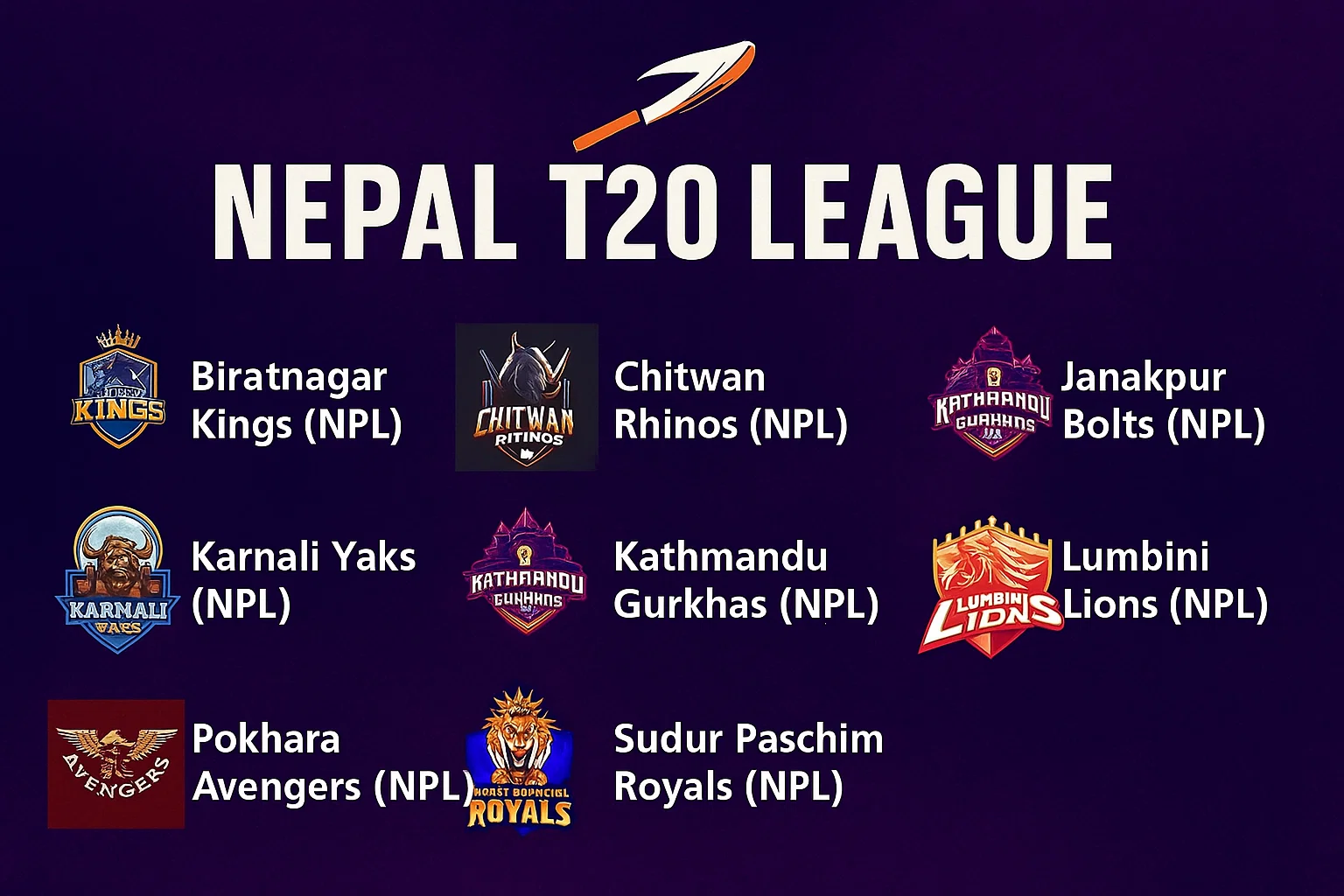
The Nepal T20 League typically features between eight franchise teams, each representing different regions or cities across Nepal. These franchises aren’t just cricket teams; they’re community representatives that generate regional pride and passionate fan followings. Understanding each team’s composition, history, and playing style adds depth to your appreciation of the league.
Each franchise maintains a squad of around 20-25 players, carefully balanced between experienced veterans and exciting young talents. Teams employ professional coaching staff, support personnel, and management structures that mirror international cricket operations. This professional setup ensures consistent performance standards and systematic player development.
The teams undergo player auctions where franchises bid for available talent, creating a dynamic market-driven system. These auctions generate tremendous excitement and media coverage, often becoming spectacles in themselves. Star players command premium prices, while emerging talents sometimes become unexpected bargains, leading to thrilling underdog stories as less-favored teams outperform expectations.
Team rivalries have developed naturally, with certain matchups becoming marquee encounters that fans eagerly anticipate. These rivalries add narrative dimension to the competition and ensure consistently high attendance for derby matches. The competitive intensity in these meetings often surpasses regular-season fixtures, showcasing cricket at its most exciting.
Format and Tournament Structure
The Nepal T20 League operates on a format designed to maximize competitive balance while maintaining entertaining cricket. Most seasons employ a league-stage followed by playoff matches, though specific formats can vary between seasons. Understanding the structure helps you appreciate strategic decisions teams make throughout the tournament.
In the league stage, each team typically plays a predetermined number of matches against every other team. This round-robin format ensures that every team has equal opportunity and eliminates randomness that could artificially determine outcomes based on draw luck. Teams accumulate points based on wins, losses, and sometimes bonus points for performance margins, creating a transparent ranking system.
The playoff stage usually consists of elimination matches where top-finishing teams compete for the championship title. Semi-finals and finals matches carry immense pressure and showcase cricket under intense situations. These knockout matches often produce the tournament’s most memorable moments, as teams deploy aggressive strategies and players deliver performances under extreme pressure.
The T20 format itself dictates the league’s tactical framework. Matches typically feature aggressive batting in the powerplay overs (first six overs where field restrictions apply), calculated shot selection in middle overs, and explosive finishing batting in the final overs. Bowling strategies emphasize death bowling expertise, variations, and yorkers. This creates a spectacle that appeals to modern sports fans seeking fast-paced action.
Nepal T20 League 2025 SCHEDULE
This 2025 Season Nepal T20 League Starts From 17 Nov 2025 To 3 Dec 2025 , A Total of 32 T20s Played Between 8 Teams Including Semi Final & Final.
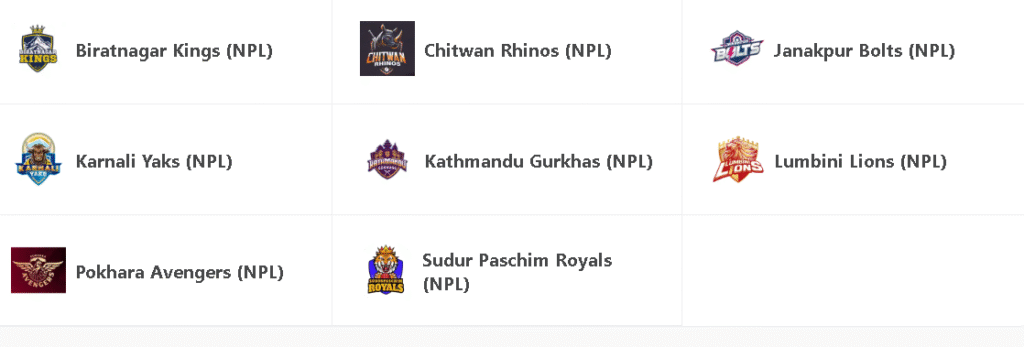
NPL T20 Teams
Notable Players and Stars
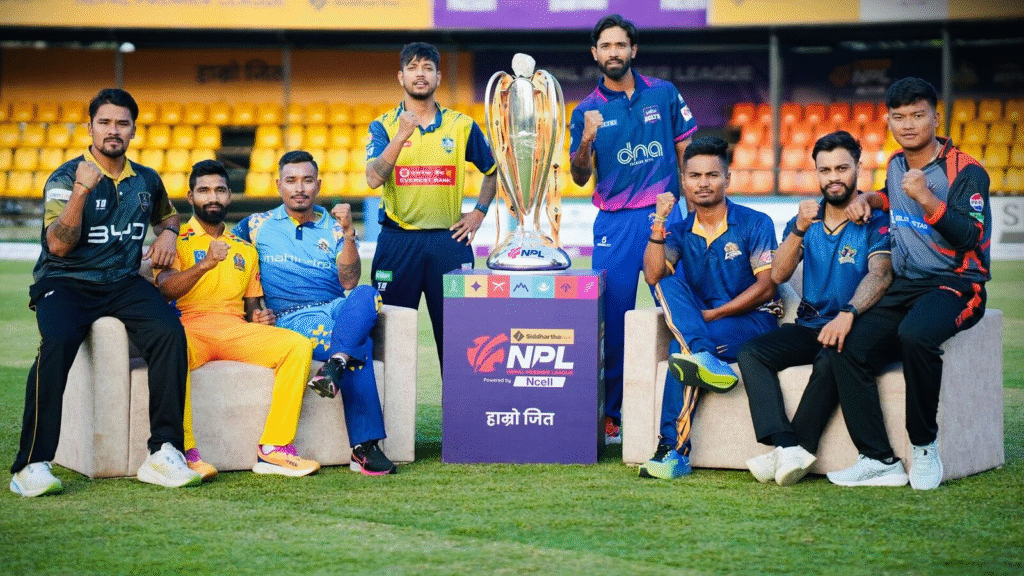
The Nepal T20 League has produced several cricket stars who’ve represented Nepal internationally. Players like Sandeep Lamichhane, the leg-spinner who’s played in the IPL, and Rohit Paudel, a talented wicket-keeper batsman,’ve used the league as a platform to showcase abilities. These players inspire younger cricketers and demonstrate the pathway to international cricket.
The league features a mix of experience and youth. Veteran players bring credibility and mentorship, while young talents bring energy and contemporary cricket understanding. This blend creates an ideal learning environment where emerging players develop under guidance from established professionals. Many international cricket observers monitor Nepal T20 League performances to identify potential international prospects.
Star batsmen in the league often set records for highest scores, fastest centuries, and aggressive strike rates. Their explosive batting creates entertaining cricket that attracts casual viewers and hardcore fans alike. Similarly, standout bowlers who master variations, maintain disciplined line and length, or consistently pick crucial wickets become fan favorites and attract significant media attention.
How to Watch Nepal T20 League
Broadcasting has become increasingly sophisticated for Nepal T20 League matches. National television networks provide coverage, while digital platforms have expanded accessibility. This multi-platform approach ensures fans can watch matches conveniently through their preferred devices.
Live streaming services have democratized access, allowing fans worldwide to watch matches regardless of location. This global reach benefits the league tremendously, as Nepal’s diaspora communities follow matches intensely, and international cricket enthusiasts discover the league. Social media platforms also provide match updates, highlights, and analysis that keep fans engaged even when they can’t watch live.
Attending matches in person remains incredibly rewarding. Stadium atmospheres during important Nepal T20 League fixtures are electric, with passionate fans creating vibrant environments. Local food vendors, entertainment, and pre-match festivities make stadium visits memorable experiences beyond just watching cricket.
Impact on Nepali Cricket Development
The Nepal T20 League’s impact on cricket development extends far beyond entertainment. It’s created sustainable employment for cricketers, allowing talented players to pursue careers in their passion. This professionalization has encouraged more young people to take cricket seriously, knowing viable pathways exist.
Infrastructure development’s followed league establishment. Better stadiums, practice facilities, and training centers have been constructed to support league operations. These facilities benefit domestic cricket broadly, not just the professional league, as junior players access improved training environments.
The league’s accelerated player development through consistent high-quality competition. Players facing different opponents regularly improve tactical awareness, pressure management, and technical skills faster than in sporadic domestic competitions. This competitive intensity translates to improved international performance, as evidenced by Nepal’s growing competitiveness in global T20 tournaments.
Sponsorship and Commercial Growth
Commercial growth surrounding the Nepal T20 League reflects growing market confidence in Nepali cricket. Sponsorship deals with major brands provide financial sustainability and elevate league prestige. These partnerships signal to investors and fans that the league’s here to stay and growing.
Broadcasting rights sales generate significant revenue supporting league operations and player compensation. As viewership grows, rights fees increase proportionally, creating a positive feedback loop where improved revenue enables better player salaries, better matches, and increased viewership. This virtuous cycle benefits all stakeholders.
Merchandise sales, ticket revenue, and hospitality packages contribute additional income streams. Fans purchasing team jerseys, caps, and other merchandise build emotional connections while generating revenue. Premium seating areas with improved amenities attract affluent fans willing to pay premium prices for enhanced experiences.
Venues and Stadiums
The Nepal T20 League matches occur in stadiums across the country, with premier venues hosting important fixtures. The Tribhuvan University International Cricket Ground in Kathmandu represents the league’s premier venue, featuring modern facilities and substantial seating capacity. This ground’s hosted crucial league matches and playoff encounters.
Other venues including the Mulpani Cricket Ground and various regional stadiums provide competitive playing surfaces. Each venue brings unique characteristics that influence match outcomes—some favor fast bowlers, others assist spinners, while some enhance batting-friendly conditions. Teams leverage venue knowledge strategically when planning playing XI compositions and match strategies.
Key Statistics and Records
The Nepal T20 League’s accumulating impressive records season after season. Highest individual scores, fastest centuries, best bowling figures, and most wickets in a season represent various record categories that players chase. These records often become benchmarks defining eras and generations of league cricketers.
Team records include highest team totals, lowest team totals, widest victories, and most consecutive wins. These statistics reflect team performance evolution and often coincide with specific seasons where particular teams dominated. Analyzing trends in these statistics reveals how the league’s competitive balance has evolved.
Future Plans and Expansion
Nepal’s cricket administrators envision continued Nepal T20 League expansion. Proposals include increasing franchise numbers, extending tournament duration, and improving broadcast quality. These expansion plans reflect confidence in the league’s commercial viability and sporting sustainability.
International expansion possibilities exist, with concepts like Nepal T20 League All-Stars touring other countries or hosting international franchise participation. Such ventures would elevate the league’s global profile and attract international investors. These possibilities remain aspirational but increasingly realistic given current trajectory.
Youth development structures around the league are being strengthened, with age-group tournaments and development programs feeding younger players into senior league competition. This pathway approach ensures continuous talent pipeline sustainability.
Comparison with Other T20 Leagues
The Nepal T20 League, while younger than established leagues like the IPL, BBL, or PSL, follows similar models adapted to local contexts. Comparing these leagues provides perspective on the Nepal T20 League’s position and potential trajectory.
The IPL’s massive scale, financial resources, and global reach represent an aspirational model, though Nepal’s market differs significantly. The PSL’s regional focus and domestic development emphasis more closely parallel Nepal T20 League objectives. BBL’s entertainment-focused approach has influenced how Nepal markets its league to broader audiences.
Each league reflects its country’s cricket culture, economic capacity, and market dynamics. Nepal’s league appropriately emphasizes domestic development and regional representation while gradually incorporating international elements. This balanced approach suits Nepal’s stage of cricket development.
Nepal T20 League: Frequently Asked Questions
Q1: When does the Nepal T20 League typically occur annually?
A: The Nepal T20 League usually takes place during specific months that avoid conflicts with international cricket fixtures and national holidays. Most seasons run for approximately 3-4 weeks, though exact scheduling varies seasonally. The league administration coordinates with international cricket boards to ensure optimal scheduling that maximizes player availability and viewership.
Q2: How can international players participate in the Nepal T20 League?
A: International player participation remains limited in current seasons, with focus primarily on domestic talent development. However, future seasons may introduce overseas player slots, following models employed by other successful T20 leagues. This potential expansion would elevate competitive standards while providing international exposure to the league.
Q3: What’s the prize money distribution in the Nepal T20 League?
A: Prize money varies by season and depends on sponsorship levels and broadcast revenues. Championship-winning teams receive substantial rewards, with lesser amounts for runners-up and semi-finalists. Individual performance awards also exist, recognizing top scorers, leading wicket-takers, and player-of-the-match awardees. While prize money’s growing, it remains modest compared to established leagues, reflecting Nepal’s developing cricket market.
Q4: How does the Nepal T20 League impact national team selection?
A: The Nepal T20 League serves as the primary selection platform for national team scouts. Outstanding performances in the league often translate to national team call-ups. This direct pathway incentivizes players to perform consistently in league matches, knowing visibility directly influences international opportunities. Conversely, national team players use league matches to maintain form during international cricket schedules.
Q5: What’s the viewership capacity for Nepal T20 League matches?
A: Viewership continues growing with each season. Live attendance at major venues ranges from modest numbers during early league matches to packed stadiums for playoff encounters. Television viewership reaches hundreds of thousands domestically, with additional international viewers via streaming platforms and YouTube highlights. Exact figures vary by match importance and team popularity.
Q6: How can someone invest in or sponsor the Nepal T20 League?
A: Sponsorship opportunities exist at league and franchise levels. Companies can sponsor individual teams, specific matches, or entire seasons. Investment avenues include broadcast rights purchases, official merchandise partnerships, hospitality packages, and corporate boxes. Interested parties should contact Nepal’s cricket board or specific franchise management to explore partnership opportunities suited to their business objectives and budgets.
Conclusion
The Nepal T20 League represents cricket’s promising future in Nepal. This dynamic tournament combines entertainment, competition, and player development in a format that captivates modern sports audiences. From its humble beginnings to its current trajectory of growth, the league demonstrates how structured domestic competition can transform a nation’s cricket landscape.
For cricket enthusiasts seeking emerging talent, engaging tournaments, and authentic grassroots competition, the Nepal T20 League offers exactly that. As the league continues evolving and improving, it’ll undoubtedly produce more international stars while providing thrilling entertainment for millions of fans across Nepal and beyond.
Whether you’re following the league casually or deeply invested in Nepali cricket’s development, the Nepal T20 League merits your attention. It’s a fascinating example of how emerging cricket nations build sustainable sporting futures, and an exciting window into cricket’s global expansion beyond traditional powerhouses.